How to Style a Trench Coat 5 Ways
A trench coat earns its place in an autumn wardrobe for one reason: it is the only coat that works over almost everything, in almost any weather short of a real freeze. The trick is not owning five coats. It is knowing how to change what is underneath, how you belt it, and what you wear on your feet.
If you already have the autumn capsule from this site, you already have the starting point — the trench was its transitional hero. This piece shows five ways to wear that same coat, so it does not become the thing you reach for only on rainy commutes.
Get the fit right first
Before the five outfits, three fit checks decide whether any of them work:
- Shoulder seam on the shoulder. A trench that droops past the shoulder looks borrowed, however good the rest is.
- Sleeve ending at the wrist bone. You should be able to see a shirt cuff or a knit sleeve, not a hand disappearing into fabric.
- Length that suits the rest of your outfit. A knee-length trench is the most versatile: it covers a dress or a skirt, and it does not fight with wide-leg trousers. A shorter trench suits cropped trousers and jeans; a longer one suits dresses and boots.
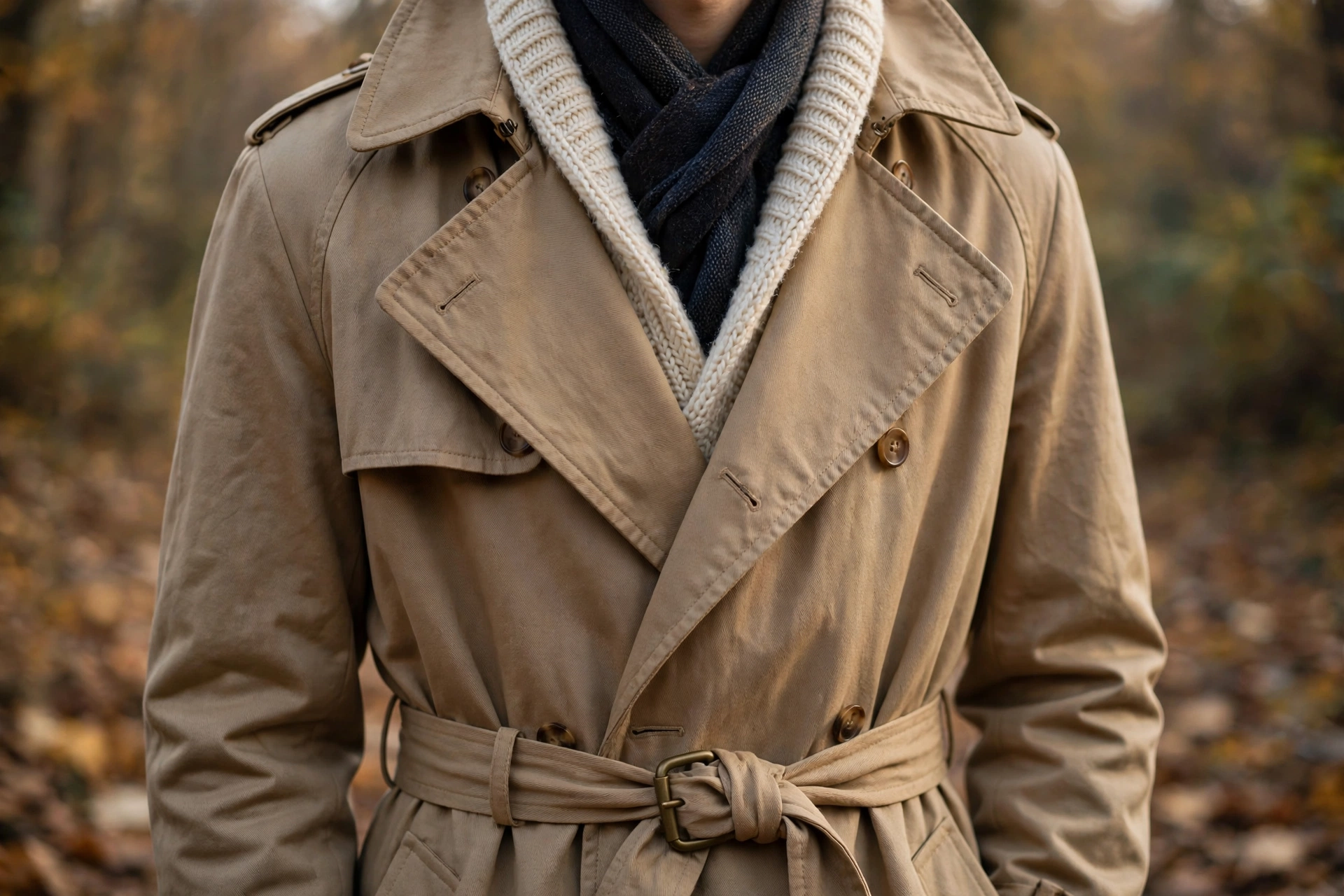
Belt it, leave it open, or tie it loosely behind you — those three belt choices alone change the coat’s silhouette, so try each one in the mirror before deciding the coat “doesn’t work.”
1. Work, polished
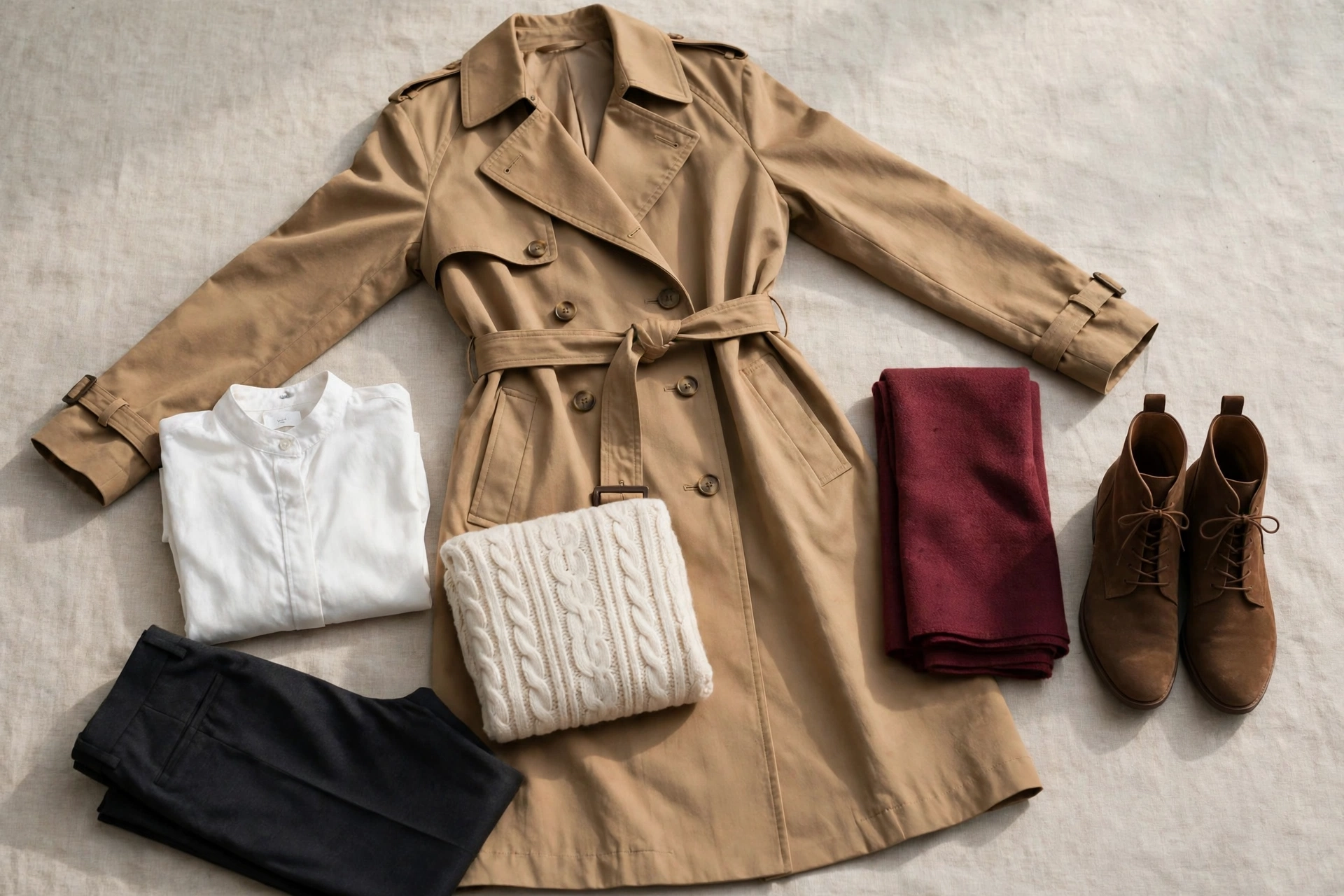
White shirt + black wide-leg trousers + trench belted + ankle boots.
Belt the coat and keep the shirt tucked in, so the line from shoulder to shoe stays clean. This is the version for a meeting day: nothing underneath competes with the coat, and the boots keep the trousers from dragging in wet weather.
2. Weekend, relaxed
Striped long-sleeve top + dark straight-leg jeans + trench worn open + white trainers or loafers.
Leave the coat open and the belt tied loosely behind you. The open coat shows the outfit underneath, so the look reads relaxed rather than formal, and trainers keep it practical for a long walk. Roll the sleeves once, if the weather allows, for a deliberately unfinished finish.
3. Evening, simple
Black knit dress + trench belted over it + ankle boots + one scarf, if needed.
A trench over a dress works because the coat adds structure without adding bulk. Keep the dress simple and let the coat be the outer layer — a busy print underneath a belted trench tends to look crowded. If the evening turns cold, a scarf in a warm neutral is warmer, and cheaper, than a second coat.
4. Rainy day, practical
Black turtleneck + dark trousers + trench belted + ankle boots, with a scarf in your bag.
This is the trench doing its original job. Pop the collar, belt it snugly, and choose boots with a grip rather than a smooth sole. A waterproofing spray on the coat, applied before the season starts and reapplied after heavy rain, matters more than any styling trick on a wet day.
5. Travel day, layered
Cream knit + black trousers + trench worn open over a light scarf + trainers.
For travel, the trench is your blanket, your rain cover and your smart layer in one. Wear it open over a knit so you can add or remove the scarf without taking the coat off, and choose trousers that do not crease badly after sitting. The scarf doubles as a wrap on a cold train or plane.
Colour and fabric notes
Camel, navy and black are the easiest trenches to style five ways, because they sit over any neutral palette. If your wardrobe is mostly warm neutrals, camel is the natural choice; if it is mostly cool neutrals, navy or black will get more wear.
On fabric, a cotton-blend trench with a water-resistant finish is the practical autumn choice. A very light trench is better for early autumn and for warmer climates; a heavier, lined trench carries you further into cold weather, but will feel too warm on a mild afternoon. Buy for the weather you actually get, not the weather in a photograph.
Care notes that make a trench last
Hang it on a wide, sturdy hanger rather than a wire one, so the shoulders keep their shape. Spot-clean small marks promptly, and have it professionally cleaned at the end of the season rather than washing it at home unless the care label says otherwise. Store it buttoned, belted loosely, in a breathable garment bag — not in plastic, which traps moisture.
FAQs
What do I wear under a trench coat?
Almost anything in a neutral palette: a shirt and trousers for work, a knit and jeans for weekends, a simple dress for evenings. The rule is that the layer underneath should be slimmer than the coat, so the coat can close without pulling.
Should a trench coat be belted or open?
Both, on different days. Belted looks polished and defines the waist; open looks relaxed and shows the outfit underneath. Try both with the same outfit — the difference is larger than most people expect.
Can I wear a trench coat if I am petite or tall?
Yes, with length as the main adjustment. Petite frames usually suit a knee-length or slightly shorter trench; taller frames can carry a longer length without it overwhelming the outfit. In both cases, the shoulder fit matters more than the label size.
Is a trench coat enough for winter?
For mild autumn and early winter, yes, with a knit and scarf underneath. For genuinely cold winter weather, you will want a lined wool coat instead — a trench is a transitional coat, not a deep-winter one.
How do I stop a trench coat looking too formal?
Wear it open, pair it with trainers or loafers instead of boots, and choose a relaxed layer underneath, such as a striped top and jeans. Formality comes from the combination, not from the coat alone.